

What "Old Car" Really Means Here
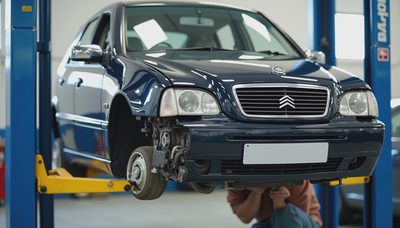
This is not about classic cars. This is not about a weekend project that lives in a garage and comes out on sunny Sundays. This is about the everyday car parked on your driveway or on the street outside — the one you use to get to work, do the school run, and visit family at the weekend.
In this context, an "old car" is one where the repair bill you are facing is large enough — relative to the car's value — that you are genuinely asking yourself whether it is time to stop spending and move on.
That threshold arrives at different points for different people. For a Ford Fiesta worth £2,000, a £600 repair is a serious question. For a ten-year-old Volvo worth £5,000, a £1,500 cambelt and clutch job is a different kind of calculation. The car's market value matters, but it is not the only number that counts. A car worth £1,500 that needs a £1,200 repair is not automatically a write-off. If that £1,200 buys you another two years of reliable motoring, it may still be the cheapest option available to you.
The Repair vs Replace Logic
The common advice is: if the repair costs more than the car is worth, scrap it. That is too simplistic. A car's market value tells you what someone else would pay for it. It does not tell you what the car is worth to you.
A better framework is to compare the cost of repairing your current car against the cost of replacing it — not against the car's theoretical market value, but against the real-world cost of getting into something else that you would actually trust.
A £1,500 repair on a car worth £1,200 sounds like a bad decision on paper. But what does £1,500 buy you in the 2026 used car market? At the time of writing, used car prices remain high. £1,500 gets you something old, with high mileage, unknown history, and no guarantee that it will not need its own expensive repair within six months. If your current car is known to you — you know its history, you know what has been replaced, you know what is coming — spending the £1,500 may be the more rational choice than rolling the dice on an unknown replacement.
The question is not "is the repair more than the car's value?" The question is "what is the cheapest way to stay reliably on the road for the next two years?" Sometimes that is fixing the car you already have. Sometimes it genuinely is replacing it. The calculation should be based on future cost and risk, not past purchase price.
A Practical Decision Framework
When a customer stood at my service desk weighing up a big repair, I would walk them through a few simple questions. They cut through the emotion and get to what actually matters.
1. What is the repair, and does it reset the clock?
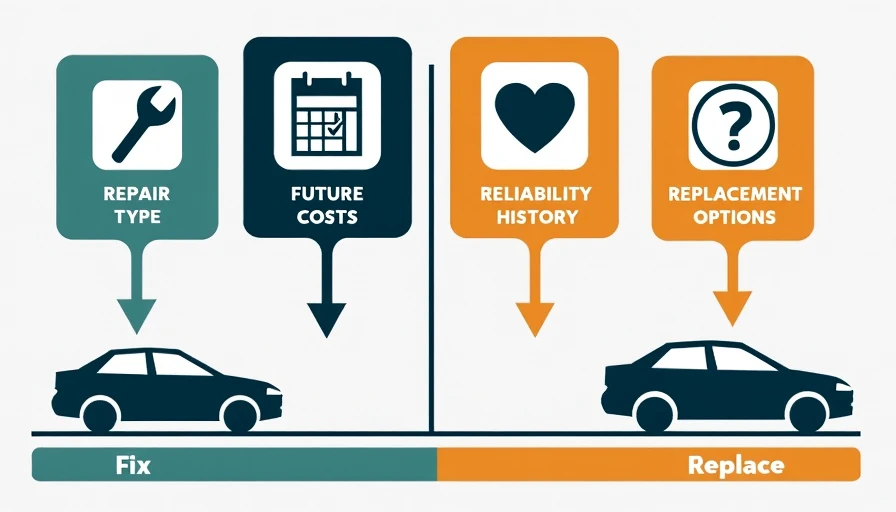
Some repairs are wear-and-tear items that are expected on any ageing car: clutch, timing belt, brakes, exhaust, suspension components. If you spend £800 on a clutch replacement, that clutch should be good for another 60,000–80,000 miles. You are not patching a problem — you are resetting the clock on a major component. That makes the repair easier to justify than spending £800 chasing an intermittent electrical fault that nobody can definitively diagnose.
2. What else is likely to need doing in the next 12 months?
The worst repair decision is the one where you spend £600 now, then face another £500 bill in three months, then an MOT failure six months after that. Before committing to a large repair, ask your garage for an honest assessment of the car's overall condition. A good garage will tell you if the car is otherwise solid or if they can see more bills coming. Listen to what they say — and what they hesitate to say.
3. Has this car been reliable, or is it wearing you down?
Reliability history matters enormously. A car that has been dependable for years and now needs one significant repair is a very different proposition from a car that has been nickel-and-diming you every few months. If the car has a proven track record with you, one large bill is probably worth paying. If you have lost confidence in it — if you are constantly waiting for the next warning light — the emotional case for keeping it weakens, and that matters alongside the financial one.
4. What would you actually replace it with?
Be specific, not abstract. Do not compare your repair bill to a vague idea of "something better." Find a real replacement — search online, see what is actually available at your budget. If your budget is the value of your current car plus the repair cost, look at what that total figure buys. If what you find is no better than what you already have after the repair, fixing makes more sense. If it buys you something meaningfully newer, lower mileage, or more reliable, replacing becomes the smarter move.
When Keeping the Car Still Makes Sense
Here are the scenarios where fixing is the right call.
The car is otherwise healthy. It has been reliable. The repair is a known wear item — cambelt, clutch, brakes. The rest of the car has been inspected and there are no obvious large bills on the horizon. You spend the money, reset the clock, and carry on. This is the most common scenario, and usually the right one.
You cannot replace it for the repair cost. The repair is £700. A replacement car you would trust costs £4,000. You do not have £4,000. You do have £700. The maths is simple. Fix it and keep going. This is not settling — it is making the financially sensible choice.
You know the car's history. You bought it three years ago, you have serviced it properly, you know the timing belt was done last year and the tyres have 6mm of tread. That knowledge has real value. An unknown used car is an unknown risk. The car you know is a calculated one.
The car fits your life. It is the right size, cheap to insure, economical on fuel, and does everything you need. Replacing it with something comparable would cost more in purchase price, and possibly more in running costs too. If the car works for you, keeping it working is logical.
When to Walk Away
Here is when the repair stops making sense and it is time to let go.
The repair cost exceeds the car's value and another big bill is likely within 12 months. This is the key threshold. If the car needs £1,200 now and the garage tells you the subframe is corroded, the clutch is nearing the end of its life, and the exhaust is patched up — you are not spending £1,200. You are spending £1,200 as the first instalment. That is the moment to stop.
The car is structurally compromised. Serious corrosion on the chassis, subframe, or structural mounting points is usually a terminal diagnosis on an everyday car. MOT corrosion advisories that keep getting worse are a warning. Once structural welding becomes the conversation, the car has usually crossed the line from "old but maintained" to "end of life."
You have lost confidence in it. This is not a spreadsheet item, but it matters. If you dread driving it, if you are constantly listening for noises, if you have stopped taking it on longer journeys because you do not trust it — the car is no longer doing its job. Transport is meant to reduce stress, not cause it. When a car becomes a source of anxiety, the case for replacement is strong even if the numbers are borderline.
The engine or gearbox has failed catastrophically. On most everyday family cars worth under £4,000, a major engine or gearbox failure is the end of the road. The repair cost will almost certainly exceed the car's value, and a used replacement engine or gearbox comes with its own unknowns. Unless the car has significant sentimental value, this is the point to walk away.
What the 2026 Used Car Market Means
The used car market remains more expensive than it was a few years ago. Supply is tighter. Prices for decent, reliable used cars have not returned to pre-2020 levels and may not for some time. This shifts the repair-vs-replace calculation in favour of repairing more often than in the past.
A £1,000 repair on a car worth £1,500 might have been a clear "scrap it" decision in 2018. In 2026, when that same £2,500 total would struggle to buy anything with a fresh MOT and a known history, the repair is more likely to be the right choice. The market reality is that keeping an older car on the road for longer is now a more financially rational decision than it was a decade ago — provided the car is fundamentally sound.
Bottom Line
The decision to fix or walk away is not about what the car is worth on Auto Trader. It is about what your next two years of motoring will cost. If the repair resets the clock on a known, reliable car, and the total spend is less than the cost of a replacement you would actually trust, fix it. If the repair is the first of several coming, or the car is structurally deteriorating, or you have simply lost faith in it, walk away.
Be honest with yourself about what you can afford to replace it with — not what you would like to replace it with, but what you can actually buy. If the honest answer is "something worse than what I already have," keep the car and fix it. That is not defeat. That is good judgment.
Fix the problem, not the panic.