


Define Both Clearly
These two terms appear on garage websites, booking forms, and service menus constantly. They sound official, but they are not standardised across the industry. One garage's full service might be another garage's interim with a few extras. Here is what they are supposed to mean.
Interim Service
A basic service designed as a mid-year check for high-mileage drivers. It is an oil and filter change with a basic visual inspection. It is not a substitute for an annual full service on a car doing normal mileage. Think of it as a top-up between the proper ones.
Full Service
The comprehensive annual service. It includes everything an interim does, plus additional filters, more detailed inspections, and — depending on the schedule — replacement of wear items like spark plugs. This is the service that keeps your service history meaningful and your car properly maintained year to year.
What Each Normally Includes
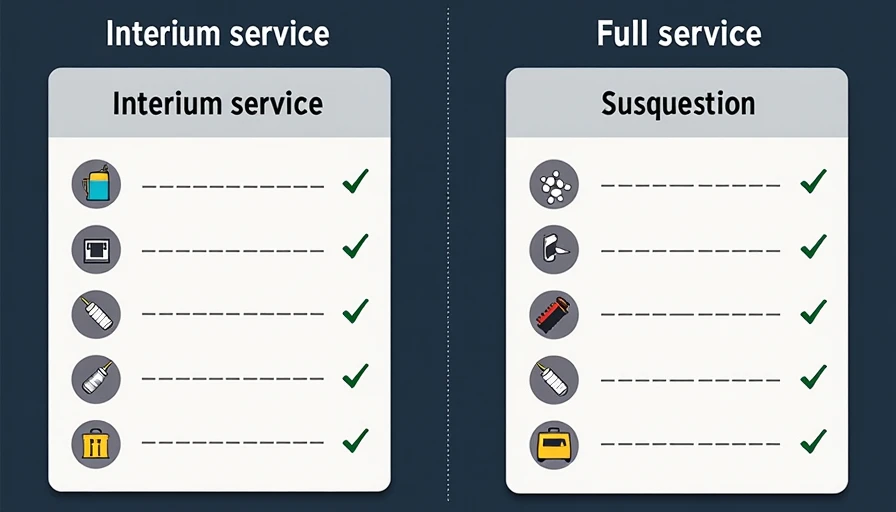
There is no law defining these terms, but a reputable UK garage will typically include the following.
Interim Service Typically Includes:
Engine oil change
Oil filter replacement
Fluid level check and top-up (coolant, brake fluid, washer fluid, power steering fluid)
Tyre pressure check and adjustment
Visual brake check (usually wheels on)
Lights, wipers, and horn check
Basic visual inspection of belts, hoses, and exhaust
Service indicator reset
Full Service Typically Includes:
Everything in the interim, plus:
Air filter replacement
Fuel filter replacement (diesel) or inspection (petrol)
Spark plug replacement (if due on schedule)
Brake inspection with wheels removed — pads, discs, calipers, and handbrake mechanism checked properly
Suspension and steering component inspection
Exhaust system inspection
Battery and charging system test
More thorough belt, hose, and fluid leak inspection
Road test (at some garages)
The full service is the real annual health check. The interim is an oil change with a quick look around.
Which Drivers Benefit from Each
Interim service makes sense for:
High-mileage drivers covering 15,000–20,000+ miles a year who need an oil change between full services. For example, a full service every 12 months and an interim at the 6-month mark.
Cars on long-life or variable service schedules that flag an oil change needed before the full inspection is due.
A used car you have just bought where you plan to do a full service soon but want fresh oil in it immediately.
A car approaching sale where you want to show recent servicing without spending on a full service.
Full service makes sense for:
The vast majority of drivers doing 8,000–12,000 miles a year. One full service every 12 months covers everything.
Cars with patchy or missing service history — start fresh with a proper full service.
Older cars where the deeper inspection matters as much as the oil change. Spotting a corroded brake line or a split CV boot at service is cheaper than finding it at MOT failure.
Cars you plan to keep long-term. A consistent full service history protects resale value and catches problems early.
When an Interim Service Is Enough
There are specific situations where an interim service is the right call and a full service would be overspending.
Your car had a full service 6 months ago and you have covered 10,000 miles since. The filters are fine. The oil is ready for a change. An interim is exactly what is needed.
The manufacturer schedule specifies an oil change at this interval but not a full inspection. Follow the schedule, not the garage's upsell.
You are selling the car next month and it just needs something recent in the book. An interim shows you maintained it. A full service adds cost you will not recover in the sale price.
When an interim is a false economy: If your car has not been properly inspected in 18 months or more, an interim does not do enough. The oil change is fine, but you are missing the brake, suspension, and exhaust inspection that a full service provides. On an older car, that inspection is the most valuable part of the service. Skipping it to save £80 now can cost £400 at the next MOT.
When a Full Service Is Worth It
A full service is worth the extra cost in almost all annual servicing situations. The price difference between an interim and a full service at an independent garage is typically £60–£120. For that, you get more parts replaced, more things inspected, and a proper record of the car's condition.
The full service is particularly worth it when:
Your car is over 5 years old. Components are ageing. The extra inspection finds things.
You rely on the car for work, family, or commuting. A breakdown costs more than the service difference in lost time and recovery fees.
You want a meaningful service history. A book full of interim stamps tells a buyer you did the minimum. A book full of full service stamps tells them you looked after it properly.
Common Upsell Confusion
Garages do not always make the distinction clear, and some use the terminology loosely. Here is what to watch for.
"We call it a major service." Some garages use "major service" to mean a full service plus additional items like brake fluid, coolant, or spark plugs. Others use "major" to mean exactly what a full service means elsewhere. Ask what is included. Do not assume the label matches your expectation.
"You need a full service because the schedule says so." The manufacturer schedule does not use the words "interim" or "full." Those are garage terminology. The schedule specifies what needs doing at each interval. Ask the garage to show you what the manufacturer actually requires at this mileage and age. If the schedule says oil and filter only, a full service is a recommendation, not a requirement.
"We always do the air filter on a full service." Some garages include the air filter in every full service regardless of whether it is due. An air filter is typically replaced every 2–4 years or 24,000–40,000 miles depending on the car. If yours was replaced last year, ask whether it actually needs doing again or whether this is a blanket policy.
"It is the same price either way." Occasionally a garage prices an interim and a full service so closely that the full service is the obvious choice. In that case, take the full service. But ask yourself why they are priced so close. A genuine full service involves more labour and more parts. If the price difference is tiny, something is being skimped on one of them.
How to handle it at the desk:
Ask directly: "What is included in your interim service, what is included in your full service, and which one does my car's schedule actually call for at this mileage?" A good garage will answer clearly. A garage that gets vague or pushy is telling you something about how they do business.
Bottom Line
For most UK drivers doing average mileage, one full service every 12 months is the right answer. The interim service has its place — high-mileage drivers, mid-year oil changes, pre-sale servicing — but it is a top-up, not an annual alternative. If your car has not had a proper inspection in over a year, pay the extra for the full service. The inspection alone is worth more than the price difference.
Fix the problem, not the panic.