

If you've been looking at used Volkswagens, Audis, or Seats recently, you've probably come across the term DSG. But what does DSG gearbox mean? In short, it stands for Direct-Shift Gearbox, which is Volkswagen Group's name for a dual-clutch automatic transmission. It's designed to shift gears faster and more efficiently than a traditional automatic or manual, giving you the convenience of an automatic with the responsiveness of a manual. DSG gearboxes have become very common on UK roads, especially in cars like the Golf, Polo, and A3. But they're not without their quirks, and understanding them can save you a lot of money and hassle.
What Is a DSG Gearbox?
A DSG gearbox is a type of automated manual transmission that uses two separate clutches — one for odd-numbered gears (1, 3, 5, 7) and one for even gears (2, 4, 6). This setup allows the next gear to be pre-selected while you're still in the current gear, so gear changes happen in milliseconds. The result is smooth, rapid shifts that feel almost seamless. Unlike a traditional automatic with a torque converter, a DSG is mechanically similar to a manual gearbox but controlled by electronics and hydraulics. You'll find DSG in many VW Group cars, including VW, Audi, Seat, and Skoda models, as well as some other manufacturers under different names (like Audi's S tronic).

How Does a DSG Gearbox Work?
Under the bonnet, a DSG works like two manual gearboxes combined into one unit. One clutch handles gears 1, 3, 5, and reverse; the other handles 2, 4, and 6 (on a 6-speed) or 2, 4, 6, and 7 (on a 7-speed). When you accelerate in first gear, the second gear is already selected but waiting on the other clutch. At the moment of shift, the first clutch opens and the second clutch closes almost instantly — typically within 8 milliseconds. That's faster than any human can shift. The gearbox can operate in full automatic mode or let you shift manually via paddles or the gear lever. It's particularly smooth under moderate acceleration, though you might feel a slight hesitation at low speeds or in stop-start traffic — that's normal.
Common DSG Problems to Watch For
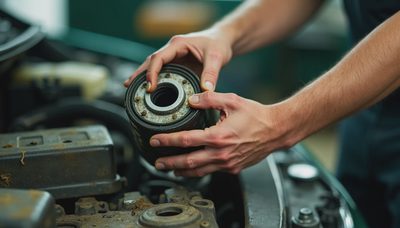
DSG gearboxes are generally reliable, but they do have known issues, especially as they age. The mechatronic unit (the electronic-hydraulic control module) is a common failure point on earlier generations, leading to jerky shifts, delayed engagement, or warning lights on the dashboard. The clutch packs also wear over time, particularly if the car has been driven hard or used mainly in town. Symptoms include shuddering during pull-away, slipping, or a burning smell. Another issue is the gearbox oil and filter — if they're not changed every 40,000 miles or 4 years (whichever comes first), the gearbox can suffer from contamination and premature wear. If you're buying a used DSG car, always ask for service records showing the gearbox oil changes. A DSG repair can be expensive — a new mechatronic unit can cost £1,500 or more fitted — so it's worth knowing what you're getting into.
DSG Gearbox vs Traditional Automatic: Key Differences
If you're still wondering what does DSG gearbox mean compared to a conventional automatic, here are the main distinctions. A traditional torque-converter automatic uses a fluid coupling to transfer power, which smooths out shifts but also absorbs some engine power and reduces fuel economy. DSG, on the other hand, has a direct mechanical connection like a manual, so it's more efficient — fuel savings can be 5-10% compared to a traditional automatic. DSG also shifts much faster, giving a sportier feel. However, torque-converter automatics tend to be smoother at low speeds and more tolerant of abuse. CVTs (continuously variable transmissions) offer even better fuel economy but can feel rubbery. For everyday driving, DSG strikes a good balance, but it requires more careful maintenance. Always check what service schedule the previous owner followed.
Is a DSG Gearbox Right for You?
For most UK drivers, a DSG gearbox offers a great balance of performance and convenience. It's ideal if you do a mix of motorway and town driving, because the quick shifts keep the engine in the sweet spot for fuel economy, and the automatic mode takes the stress out of stop-start traffic. However, if you mainly drive in heavy urban congestion, a traditional torque-converter automatic might be smoother and more relaxed. DSG can feel a bit jerky at crawling speeds, especially on older cars. Also, if you enjoy the engagement of a manual gearbox, DSG might feel too disconnected. But for the average commuter or family driver, DSG is a solid choice — just make sure you budget for that 40,000-mile service.
Final Thoughts
So, what does DSG gearbox mean? It's a dual-clutch automatic that offers fast, efficient shifts and a sporty driving feel when you want it. It's popular in VW Group cars for good reason: it combines the best of manual and automatic transmissions. But like any complex component, it requires proper maintenance. If you're considering a used DSG car, check the service history for gearbox oil changes, and take a test drive to feel for any hesitations or shuddering. With the right care, a DSG can give you years of trouble-free motoring. And if you do run into problems, a specialist gearbox garage is often a better bet than a main dealer for repairs. Don't let the jargon put you off — DSG is a proven technology that millions of UK drivers use every day.