

If you own a manual transmission car or a vehicle with a differential, you've probably come across **75w90 gear oil synthetic** as a recommended lubricant. This isn't just a fancy oil – it's a specific viscosity grade that offers excellent protection in both cold starts and high-heat operation. Whether you're servicing a daily driver or a weekend toy, understanding when and why to use synthetic 75w90 can save you money on repairs and keep your drivetrain running smoothly. In this guide, I'll break down what this oil is, when you actually need it, and how to pick the right one.
What Is 75w90 Synthetic Gear Oil?
**75w90 gear oil synthetic** is a multi-grade lubricant designed for the high loads and shear conditions found in manual transmissions, transfer cases, and differentials. The "75w" means it flows like a SAE 75 weight oil at low temperatures – great for cold-weather starts – while the "90" indicates it thickens to a SAE 90 grade at operating temperature, providing a strong oil film. Unlike conventional mineral gear oils, synthetic versions use engineered base stocks that resist thermal breakdown, resist foaming, and maintain viscosity longer. Most synthetics also contain additives that protect against extreme pressure, shock loads, and corrosion. This makes them a popular choice for modern cars that demand long drain intervals and consistent performance.
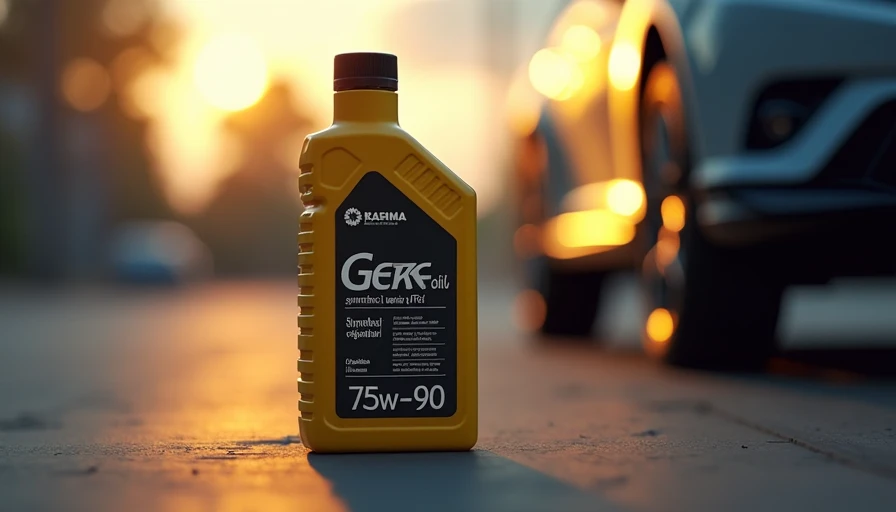
When Should You Use 75w90 Synthetic Gear Oil?
Not every car needs **75w90 gear oil synthetic**, but many do. Common applications include:
- **Manual transmissions** in front-wheel-drive and rear-wheel-drive cars – especially Japanese and European models (Honda, Toyota, BMW, Volkswagen).
- **Differentials** on both front and rear axles, particularly in trucks and SUVs.
- **Transfer cases** in four-wheel-drive and all-wheel-drive vehicles.
Check your owner's manual first. If it specifies GL-4 or GL-5 rating and 75w-90 viscosity, you should stick with it. Synthetic versions are especially beneficial if you:
- Live in a cold climate where morning temps drop below freezing.
- Tow heavy loads or drive off-road regularly.
- Want to extend oil change intervals beyond the standard 30,000 miles (some synthetics claim up to 50,000 miles).
I've seen many cars with worn synchros and noisy differentials simply because someone used a thicker conventional oil to mask a leak – don't do that. Use the correct grade.
Benefits of Synthetic Over Conventional 75w90 Gear Oil
Switching from conventional mineral gear oil to **75w90 gear oil synthetic** offers several tangible advantages:
**Better cold-weather flow** – Synthetic base oils don't contain waxes, so they stay fluid at -40°F (-40°C). Your transmission shifts smoother on cold mornings.
**Higher thermal stability** – Under heavy load or high-speed driving, synthetics resist oxidation and sludge formation. Less chance of varnish or deposits plugging oil passages.
**Longer drain intervals** – Many synthetics last twice as long as conventional oils. Over 100,000 miles, that saves you time and money.
**Improved film strength** – The extreme-pressure additives in synthetics bond to metal surfaces better, reducing wear on gears and bearings.
I've recommended synthetic 75w90 to drivers with older manual BMWs and Subarus – consistent grumbling and notchiness often disappeared after the change. It's not magic, but it's a definite improvement.

How to Choose the Best 75w90 Synthetic Gear Oil
When shopping for **75w90 gear oil synthetic**, you'll see a few choices. Here's what to look for:
**GL-4 vs. GL-5** – GL-5 oils have more extreme-pressure additives and are typically used in differentials. GL-4 is safer for yellow metals (brass shift forks, synchros) found in many manual transmissions. Some synthetics are dual-rated; check your manual's spec.
**Top Brands** –
- **Red Line** – Known for outstanding cold flow and high-temperature stability. Often used in track cars. (~$15/quart)
- **Mobil 1** – Affordable, readily available, and meets most OEM specs. (~$10/quart)
- **Royal Purple** – Strong film strength and extended life claims. (~$13/quart)
- **Amsoil** – Very high performance; often recommended for severe service. (~$16/quart)
- **Valvoline** – Good budget option; available at most parts stores. (~$9/quart)
**Price and Quantity** – Most transmissions take 2-3 quarts; differentials often require 1-2 quarts. Spending an extra $20 on synthetic over cheap conventional oil is worth it for the peace of mind.
Can You Mix Synthetic and Conventional Gear Oil?
Technically, synthetic and conventional **75w90 gear oil** are compatible – they are both oils. But mixing them dilutes the performance of the synthetic. If you're low on fluid and need a top-up, adding a conventional oil is better than driving dry. For a full change, though, stick with all synthetic to get the full benefits.
Final Verdict: Is Synthetic 75w90 Worth It?
For most drivers, switching to **75w90 gear oil synthetic** is a smart upgrade. It protects better in heat and cold, lasts longer, and often improves shift feel. The extra cost is pennies per mile when you consider the protection and longevity. Check your owner's manual, pick a reputable brand, and enjoy a smoother drivetrain. Fix the problem, not the panic – and using the right oil is a solid fix.